


Thu, 06 Nov 2025 11:17:24 +0100

At DCM Ultrasonic, we have taken this principle to a higher level of accuracy by creating ultrasonic flow cells that can intervene in fluids continuously while fully controlling the acoustic energy, temperature and dynamics of the process. This enables us to provide a clean, scalable and highly effective solution for areas that demand sustainability, traceability and quality.
These effects produce an intense physical-chemical action capable of breaking molecular structures, dispersing solid particles, eliminating dissolved gases or modifying the viscosity of complex liquids. All this is done without direct contact, without filters and without the need for added chemicals.
The result: cleaner, more homogeneous, stable and reactive fluids.
1. Energy and biogas sector
The ultrasonication of sludge and organic substrates stimulates cell hydrolysis and makes biodegradable material more accessible, which can increase biogas yield by up to 30%. DCM Ultrasonic flow cells enable cavitation to be incorporated directly into the feed circuit of digesters, reducing the need for heat or chemical pre-treatment and improving overall system performance.
2. Chemical and pharmaceutical industry
In this area, ultrasound acts as a process enhancer. Its ability to produce local micro-agitation enables finer emulsions, faster dissolutions, and better-controlled chemical reactions. Ultrasonic cells also allow for the removal of impurities and the degassing of solutions without modifying temperature-sensitive compounds. Treating fluids with ultrasound in laboratories.
In pharmaceutical production, ultrasonic process control can be integrated with SCADA or PLC systems, ensuring traceability and reproducibility in accordance with GMP standards.
3. Food and beverage sector
The ultrasonic process is used to stabilize, homogenize, and disinfect food liquids without having to use extreme heat treatments. Cavitation eliminates microorganisms, optimizes the distribution of additives, and maintains the sensory properties of the product. Treating fluids with ultrasound in bottling processes.
Our hygienic flow cells made of AISI 316L stainless steel at DCM Ultrasonic meet the most rigorous sanitary standards (CE and HACCP), making them perfect for products such as oils, fermented beverages, dairy products, or juices.
4. Shipbuilding, oil and gas industries
In hydraulic circuits, lubricants or fuels, the accumulation of solid residues or emulsified water can compromise the performance of pumps and valves. Ultrasonic action breaks down and disperses these contaminants, restoring the fluid's original viscosity and properties.
Furthermore, the process can be applied in closed lines, minimising downtime and avoiding exposure of personnel to hazardous substances.
Discover our solution for treating fluids
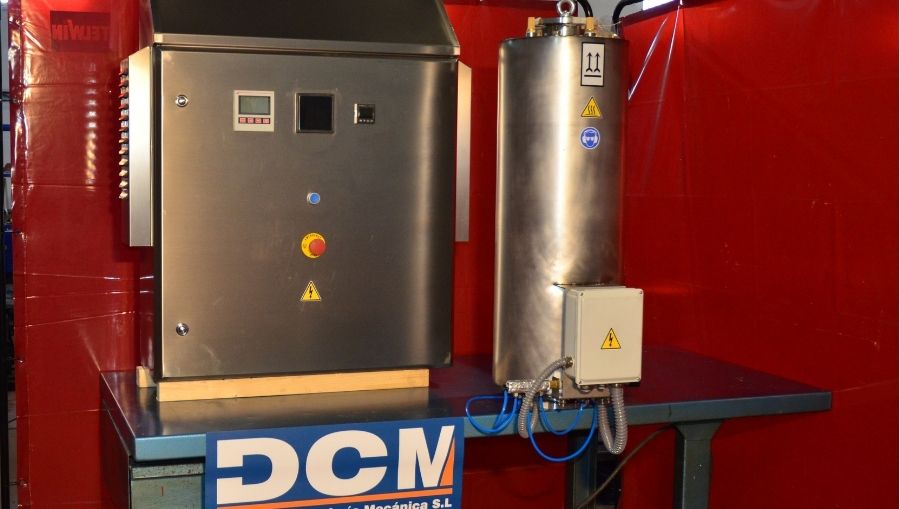
In contrast, DCM Ultrasonic fluid treatment systems allow direct and localised action on the structure of the liquid, increasing overall efficiency and drastically reducing waste. Furthermore, by not introducing mechanical elements into the fluid, the risk of cross-contamination or unwanted chemical alteration is eliminated.
Our technical team will advise you in selecting the most suitable ultrasonic cleaning system for your industrial process.
At DCM Ultrasonic, we integrate this technology into tailor-made solutions with efficient ultrasonic flow cells. Our commitment to innovation translates into cleaner, more productive and sustainable processes.
News
Ultrasonic Fluid Treatment: Efficiency and Advanced Control in Industrial Processes
06 November de 2025
In the field of modern engineering, ultrasonics for fluid treatment has evolved from an experimental technology to a fundamental tool for optimising industrial processes. When applied in a controlled manner, ultrasonic cavitation makes it possible to alter the microbiological, chemical and physical characteristics of a liquid without the need for aggressive chemical or mechanical procedures.At DCM Ultrasonic, we have taken this principle to a higher level of accuracy by creating ultrasonic flow cells that can intervene in fluids continuously while fully controlling the acoustic energy, temperature and dynamics of the process. This enables us to provide a clean, scalable and highly effective solution for areas that demand sustainability, traceability and quality.
Ultrasonic fluid treatment principle
The ultrasonic procedure is based on acoustic cavitation, a phenomenon in which high-frequency waves (normally between 20 and 40 kHz) cause microbubbles to form in the liquid, which then collapse. This drop in pressure releases energy localised in microjets, high pressures (up to 1,000 atm) and peak temperatures exceeding 5,000 K.These effects produce an intense physical-chemical action capable of breaking molecular structures, dispersing solid particles, eliminating dissolved gases or modifying the viscosity of complex liquids. All this is done without direct contact, without filters and without the need for added chemicals.
The result: cleaner, more homogeneous, stable and reactive fluids.
Industrial applications of ultrasonic fluid treatment
The use of ultrasonics in fluids has cross-cutting applications in sectors seeking to optimise their processes, reduce costs and increase the quality of the final product.1. Energy and biogas sector
The ultrasonication of sludge and organic substrates stimulates cell hydrolysis and makes biodegradable material more accessible, which can increase biogas yield by up to 30%. DCM Ultrasonic flow cells enable cavitation to be incorporated directly into the feed circuit of digesters, reducing the need for heat or chemical pre-treatment and improving overall system performance.
2. Chemical and pharmaceutical industry
In this area, ultrasound acts as a process enhancer. Its ability to produce local micro-agitation enables finer emulsions, faster dissolutions, and better-controlled chemical reactions. Ultrasonic cells also allow for the removal of impurities and the degassing of solutions without modifying temperature-sensitive compounds. Treating fluids with ultrasound in laboratories.
In pharmaceutical production, ultrasonic process control can be integrated with SCADA or PLC systems, ensuring traceability and reproducibility in accordance with GMP standards.
3. Food and beverage sector
The ultrasonic process is used to stabilize, homogenize, and disinfect food liquids without having to use extreme heat treatments. Cavitation eliminates microorganisms, optimizes the distribution of additives, and maintains the sensory properties of the product. Treating fluids with ultrasound in bottling processes.
Our hygienic flow cells made of AISI 316L stainless steel at DCM Ultrasonic meet the most rigorous sanitary standards (CE and HACCP), making them perfect for products such as oils, fermented beverages, dairy products, or juices.
4. Shipbuilding, oil and gas industries
In hydraulic circuits, lubricants or fuels, the accumulation of solid residues or emulsified water can compromise the performance of pumps and valves. Ultrasonic action breaks down and disperses these contaminants, restoring the fluid's original viscosity and properties.
Furthermore, the process can be applied in closed lines, minimising downtime and avoiding exposure of personnel to hazardous substances.
Discover our solution for treating fluids
Benefits of ultrasonic fluid treatment
Ultrasonic technology offers tangible advantages over conventional methods:- Energy efficiency: requires less energy than equivalent thermal or mechanical treatments.
- Elimination of chemicals: clean and environmentally friendly process, without additives or secondary contaminants.
- Reproducible results: each parameter is controllable and traceable.
- Versatility: applicable to liquids, emulsions, suspensions or reactive mixtures.
- Minimal maintenance: no moving parts, low wear and high durability.
- Scalability: from laboratory cells to large-scale industrial systems.
Ultrasonic treatment versus traditional methods
The use of reagents, filtration or mechanical agitation are traditional methods for treating fluids that tend to be costly in terms of energy and maintenance and normally have limited effectiveness in molecular control.In contrast, DCM Ultrasonic fluid treatment systems allow direct and localised action on the structure of the liquid, increasing overall efficiency and drastically reducing waste. Furthermore, by not introducing mechanical elements into the fluid, the risk of cross-contamination or unwanted chemical alteration is eliminated.
Our technical team will advise you in selecting the most suitable ultrasonic cleaning system for your industrial process.
DCM flow cell
One of the most promising industrial applications in the field of acoustic engineering is the treatment of fluids using ultrasound. Its ability to combine sustainability, energy efficiency and process control makes it a viable option compared to traditional systems in demanding industries such as chemicals, food and energy.At DCM Ultrasonic, we integrate this technology into tailor-made solutions with efficient ultrasonic flow cells. Our commitment to innovation translates into cleaner, more productive and sustainable processes.

 Whatsapp
